
The Osaka Expo was a highly anticipated event that the dancers looked forward to this year. Personally, it was my first time coming to Japan, but visiting this country had always been a dream of mine. Having traveled to different countries and cities across Asia, America, the Middle East, and Europe, Japan has always been the one I looked forward to the most.
This is Jemima Reyes-Ocampo’s story of how her first trip to Japan became an extraordinary chapter in her life as an artist at Expo 2025.
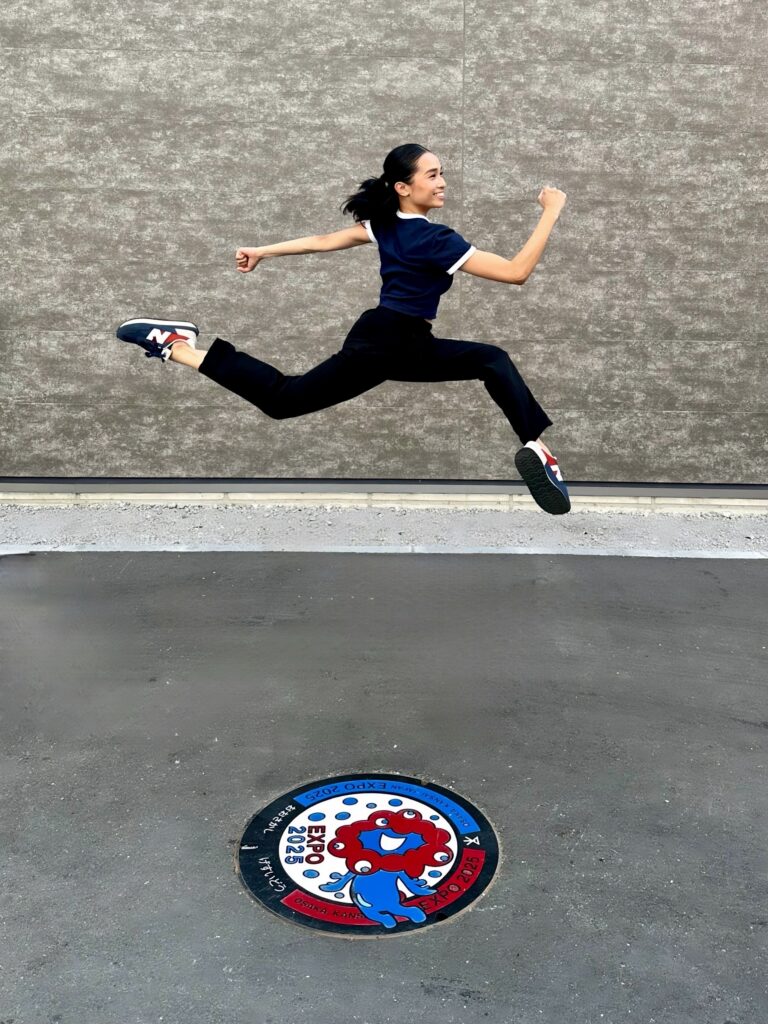
Hearing about Japan from other people, reading books, and watching videos about the culture and places always made me feel excited. People often talk about it as if it’s the best place in the world—or at least their favorite country. My own contribution to that impression is simple: every Japanese person I’ve met has been incredibly kind. Undoubtedly so. All of them. I guess all the stories, media, and personal experiences really do lead to the same conclusion—Japan is an amazing country.
So when I found out we were going to Japan, I got really excited.
Everything was prepared, and off we went! The first few days were a bit confusing, as I don’t usually navigate public transportation in Manila. In Japan, however, people walk everywhere and ride the train to all sorts of places—near and far. While we were initially confused by the train system, we were lucky to get help easily when needed. Big thanks to our phones and mobile internet—it made traveling so much easier and smoother.
We arrived in Japan and spent the first day settling in and resting. We got familiar with our accommodations and headed to a nearby mall to buy cellular data for our phones so we could navigate and stay in touch with our group. The following day, we visited the Expo for the first time. We traveled in the afternoon just to get a glimpse of what the Expo looked like.
We have Architect Carlo Calma to thank for showing us around the pavilion and personally explaining how his work came to life. Before the tour, he even brought us to a delicious Japanese restaurant where we had a great conversation about the work we’d be doing. It was a privilege to share that moment with him before stepping onto the stage.
As we entered the Expo, it finally hit me how massive this event really was. Since this was my first Expo experience, everything felt unfamiliar at first. We were welcomed by massive LED screens at the station, which led to a grand staircase rising toward the entrance. Beyond it lay an expansive open space, where the tallest flags of different countries stood together in a beautiful symbol of unity and solidarity. That was a moment to take in—one of awe and pride.
It gave me a strong sense of honor to be part of something that only happens once every few years. I felt an instant wave of gratitude and lightness in my heart—not only because I was finally in Japan, but because I was here for the Japan Expo. What an experience.
Inside the pavilion, we were greeted by the warm smiles of the staff and the historical tapestry works, which, we were told, were made by various people from all over the Philippines. “Wonderful!” I thought to myself. Soon after, we were led to our respective dressing rooms and had the chance to get familiar with the other performers. We shared our space with the Ramon Obusan Folkloric Group, who performed at the pavilion lobby. It was great to see fellow Filipino artists coming together on an international stage.
Our performance took place within a unique setup—inside the moving tiles surrounding the rattan structures. It’s essentially a walkway where six dancers can comfortably fit. While it wasn’t a traditional stage, the setup was perfect for a site-specific performance. No one would really expect to see people dancing there. The choreography was designed to move with the structure, which made it very engaging. From the audience’s view, they could see multiple layers of tiles, woven designs that moved, and the dancers performing within them. It was fascinating to perform in a spot that most people wouldn’t even consider a stage.
Anyone at the Expo could catch the show, held daily at 5:30 PM and 7:00 PM. There was no need to line up, but it was always full of people stopping to watch, clapping and taking in the experience. Hopefully, they were also discussing how unique and captivating it was.
The afternoon show focused primarily on the tile movement and the choreography. But the evening show brought an extra element of surprise: lights. The lighting was an integral part of the whole performance and created an atmosphere that was truly magical. I like to think the evening performance is the more favored one—it’s just so beautiful to witness under the night sky. The lights highlighted the textures and movements, making everything come alive in a different way.
Dancing in this space felt very different from performing on a stage with spotlights and curtains. It was more intimate, more immersive, and deeply connected to the space we were in. We weren’t just dancing in the space; we were dancing with it. That’s what made the whole performance so meaningful for me.
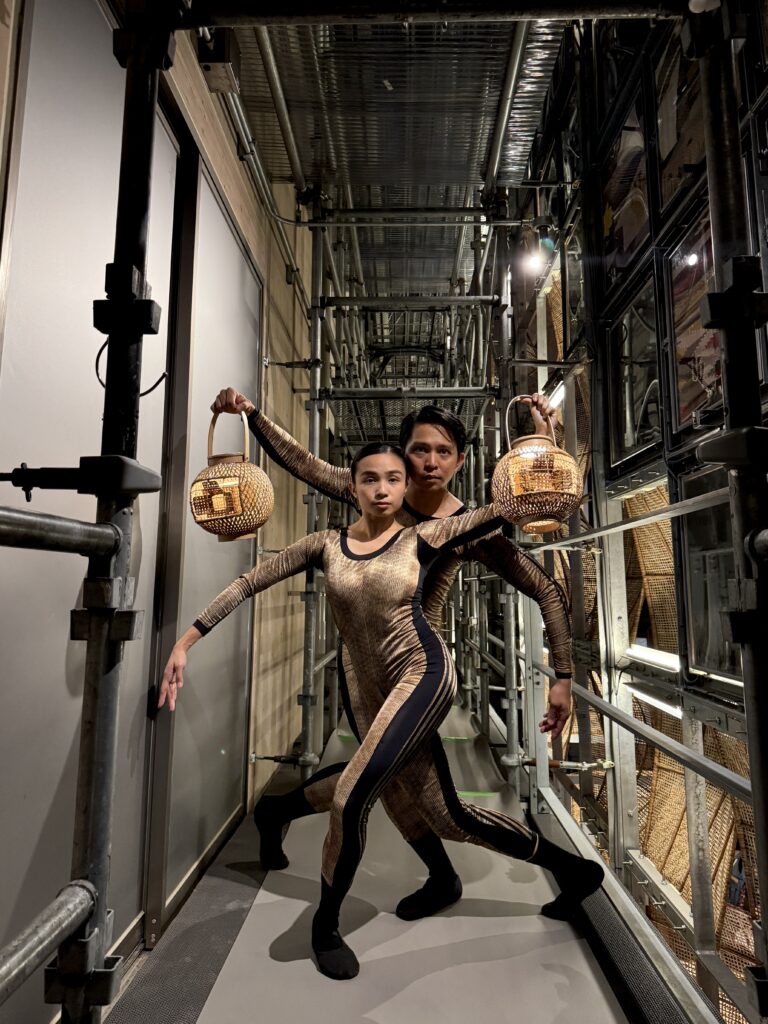
Beyond the technicalities of performing, being in Japan—especially for the Expo—meant something bigger. It meant being part of a global celebration of culture, innovation, and human connection. It was a chance to share our stories, traditions, and creativity with people from around the world. To be one of the many voices at the Expo was an honor I will never forget.
As I look back on the experience, I carry with me not just memories of a successful performance, but a deeper appreciation for the journey. From the moments of confusion on the trains to the cheers of the crowd as we danced among the tiles, everything felt like a dream unfolding.
I came to Japan with high hopes, and the experience surpassed all of them. It reminded me of why we dance in the first place—to connect, to inspire, and to celebrate the beautiful things that bring us together.
What a journey. What a gift. What an unforgettable first time in Japan.