WebClick Tracer

Categories
BP Bulletin

From Dreams to the World Stage: Experiencing Japan Through Dance

The Osaka Expo was a highly anticipated event that the dancers looked forward to this year. Personally, it was my first time coming to Japan, but visiting this country had always been a dream of mine. Having traveled to different countries and cities across Asia, America, the Middle East, and Europe, Japan has always been the one I looked forward to the most.

This is Jemima Reyes-Ocampo’s story of how her first trip to Japan became an extraordinary chapter in her life as an artist at Expo 2025.
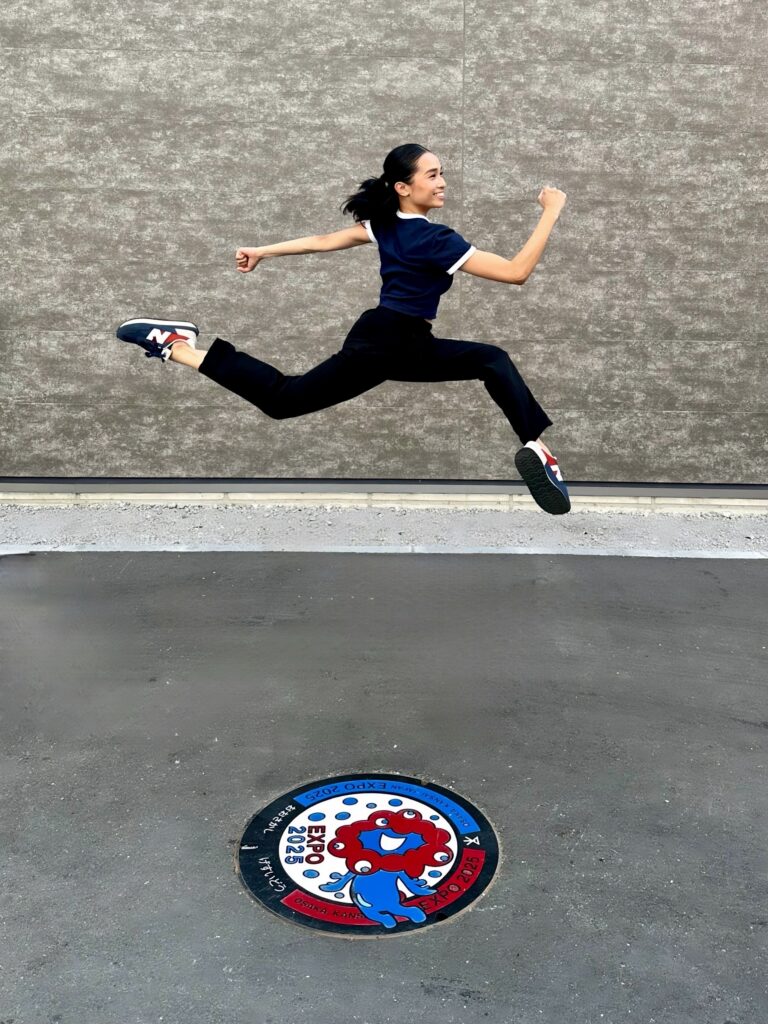
Jemima Reyes-Ocampo | Photo by Ballet Philippines

Hearing about Japan from other people, reading books, and watching videos about the culture and places always made me feel excited. People often talk about it as if it’s the best place in the world—or at least their favorite country. My own contribution to that impression is simple: every Japanese person I’ve met has been incredibly kind. Undoubtedly so. All of them. I guess all the stories, media, and personal experiences really do lead to the same conclusion—Japan is an amazing country.

So when I found out we were going to Japan, I got really excited.

Everything was prepared, and off we went! The first few days were a bit confusing, as I don’t usually navigate public transportation in Manila. In Japan, however, people walk everywhere and ride the train to all sorts of places—near and far. While we were initially confused by the train system, we were lucky to get help easily when needed. Big thanks to our phones and mobile internet—it made traveling so much easier and smoother.

We arrived in Japan and spent the first day settling in and resting. We got familiar with our accommodations and headed to a nearby mall to buy cellular data for our phones so we could navigate and stay in touch with our group. The following day, we visited the Expo for the first time. We traveled in the afternoon just to get a glimpse of what the Expo looked like.

We have Architect Carlo Calma to thank for showing us around the pavilion and personally explaining how his work came to life. Before the tour, he even brought us to a delicious Japanese restaurant where we had a great conversation about the work we’d be doing. It was a privilege to share that moment with him before stepping onto the stage.

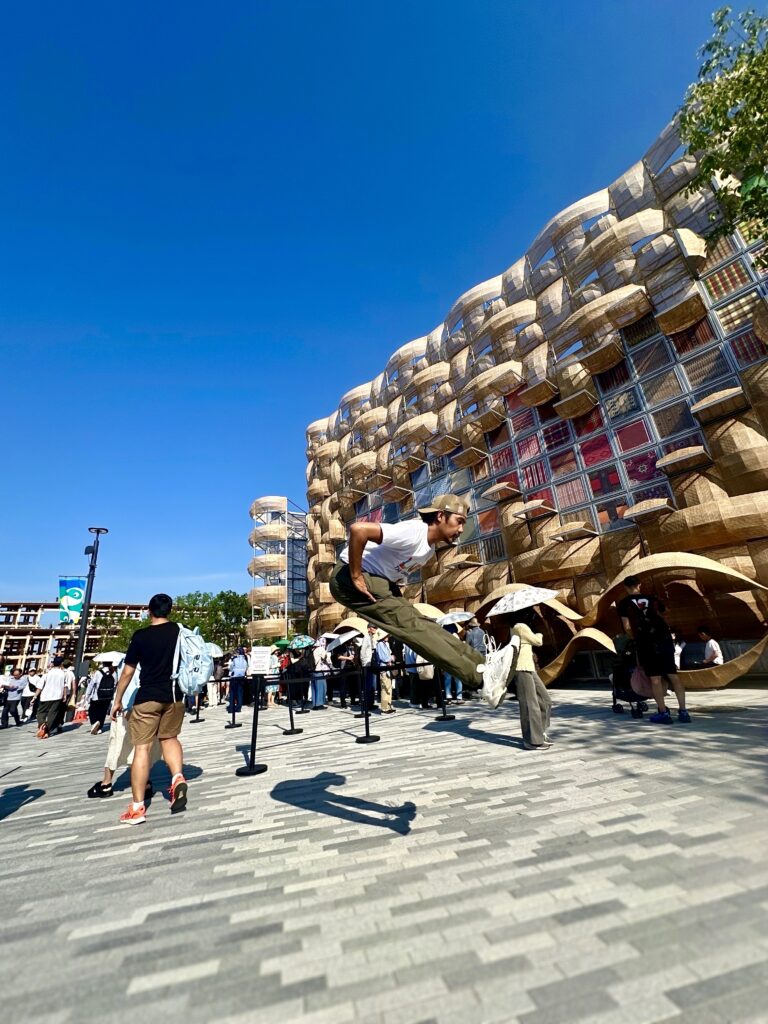
As we entered the Expo, it finally hit me how massive this event really was. Since this was my first Expo experience, everything felt unfamiliar at first. We were welcomed by massive LED screens at the station, which led to a grand staircase rising toward the entrance. Beyond it lay an expansive open space, where the tallest flags of different countries stood together in a beautiful symbol of unity and solidarity. That was a moment to take in—one of awe and pride.

 It gave me a strong sense of honor to be part of something that only happens once every few years. I felt an instant wave of gratitude and lightness in my heart—not only because I was finally in Japan, but because I was here for the Japan Expo. What an experience.

 Inside the pavilion, we were greeted by the warm smiles of the staff and the historical tapestry works, which, we were told, were made by various people from all over the Philippines. “Wonderful!” I thought to myself. Soon after, we were led to our respective dressing rooms and had the chance to get familiar with the other performers. We shared our space with the Ramon Obusan Folkloric Group, who performed at the pavilion lobby. It was great to see fellow Filipino artists coming together on an international stage.

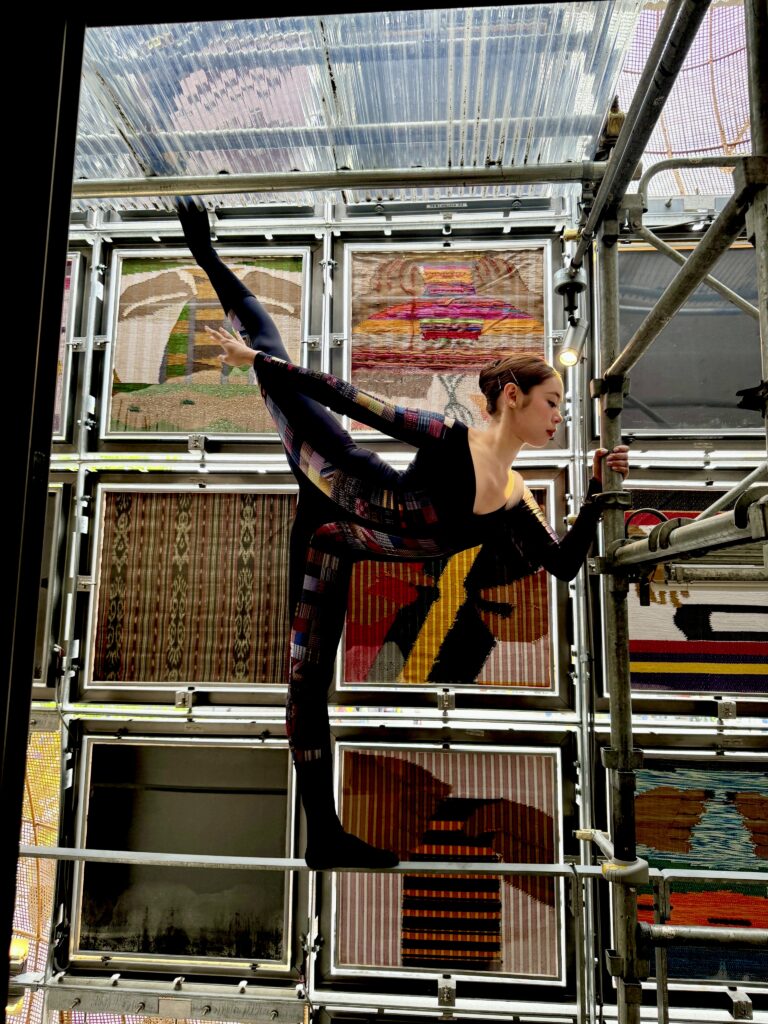
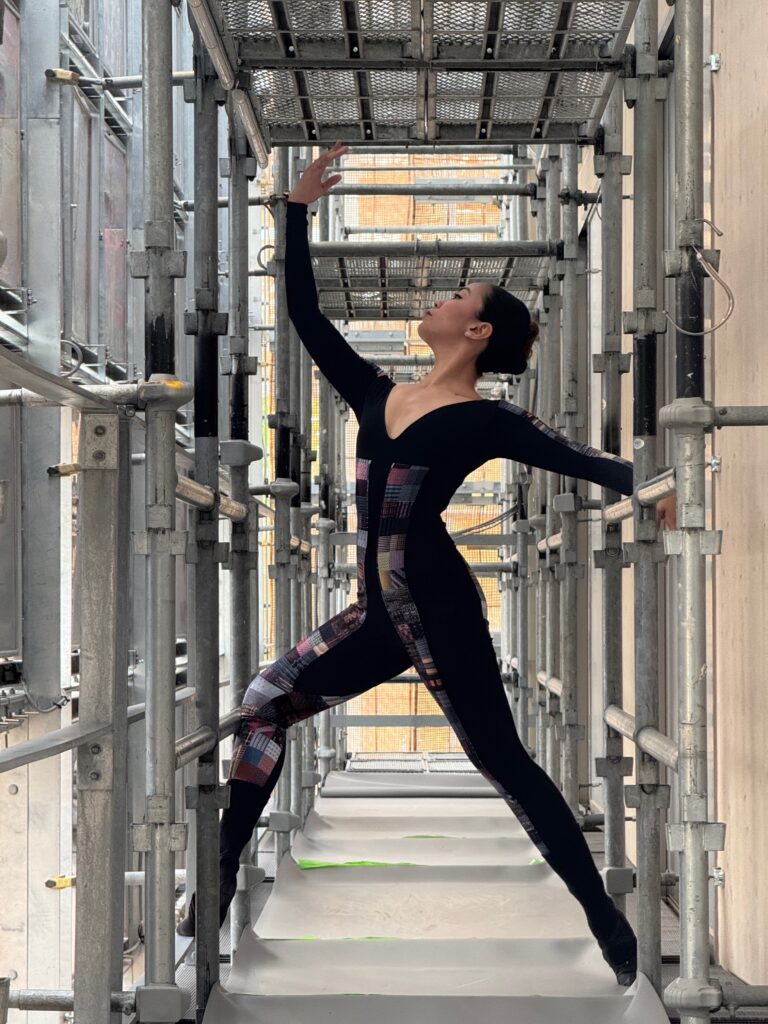
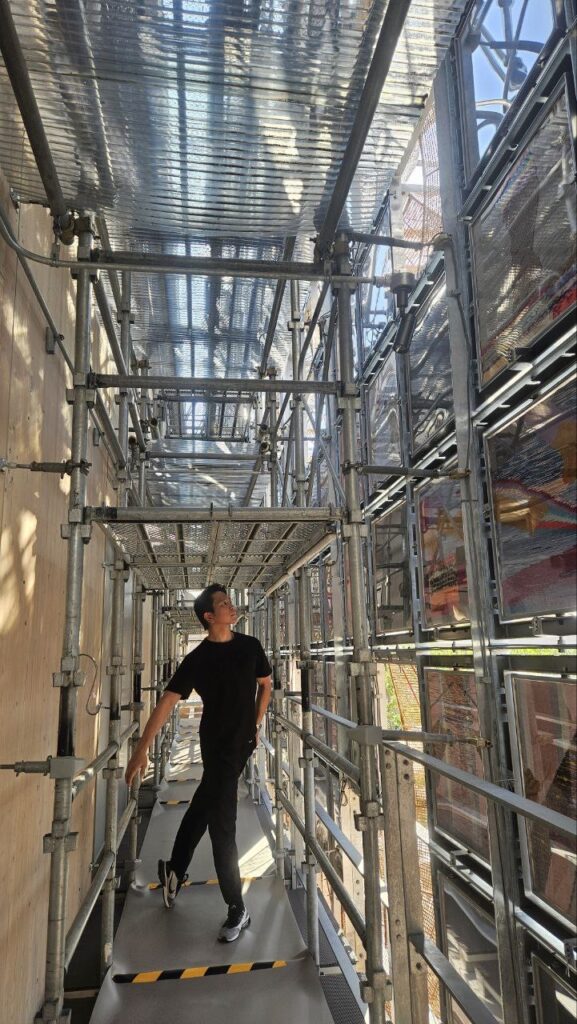
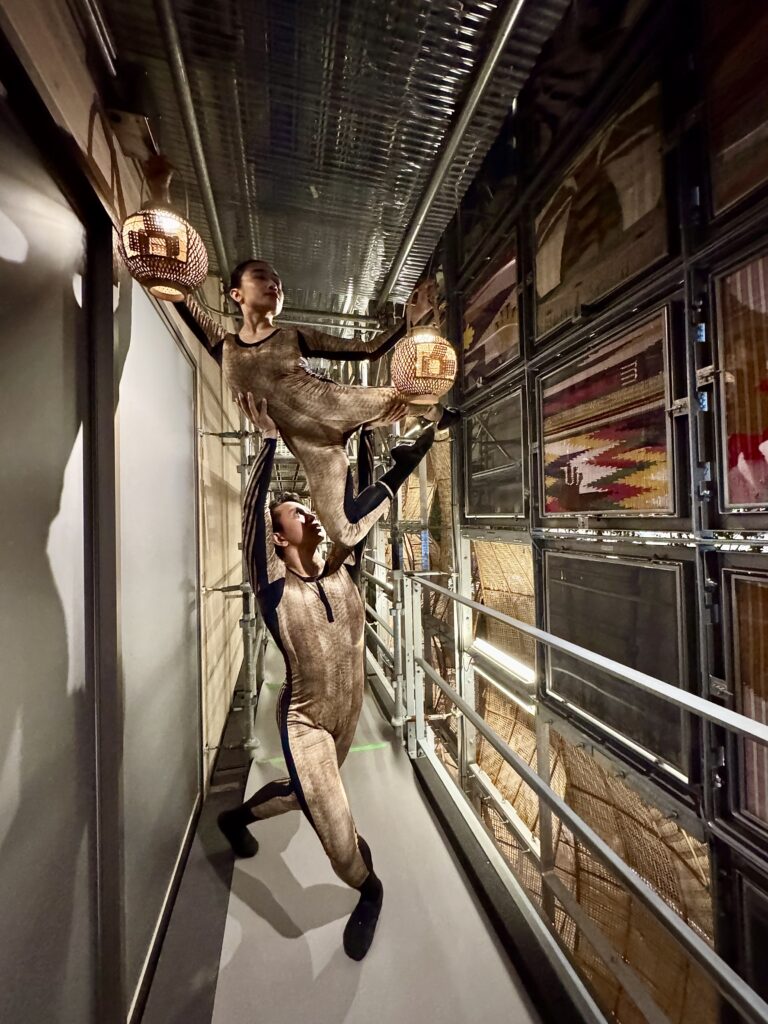
 Our performance took place within a unique setup—inside the moving tiles surrounding the rattan structures. It’s essentially a walkway where six dancers can comfortably fit. While it wasn’t a traditional stage, the setup was perfect for a site-specific performance. No one would really expect to see people dancing there. The choreography was designed to move with the structure, which made it very engaging. From the audience’s view, they could see multiple layers of tiles, woven designs that moved, and the dancers performing within them. It was fascinating to perform in a spot that most people wouldn’t even consider a stage.

 Anyone at the Expo could catch the show, held daily at 5:30 PM and 7:00 PM. There was no need to line up, but it was always full of people stopping to watch, clapping and taking in the experience. Hopefully, they were also discussing how unique and captivating it was.

 The afternoon show focused primarily on the tile movement and the choreography. But the evening show brought an extra element of surprise: lights. The lighting was an integral part of the whole performance and created an atmosphere that was truly magical. I like to think the evening performance is the more favored one—it’s just so beautiful to witness under the night sky. The lights highlighted the textures and movements, making everything come alive in a different way.

 Dancing in this space felt very different from performing on a stage with spotlights and curtains. It was more intimate, more immersive, and deeply connected to the space we were in. We weren’t just dancing in the space; we were dancing with it. That’s what made the whole performance so meaningful for me.
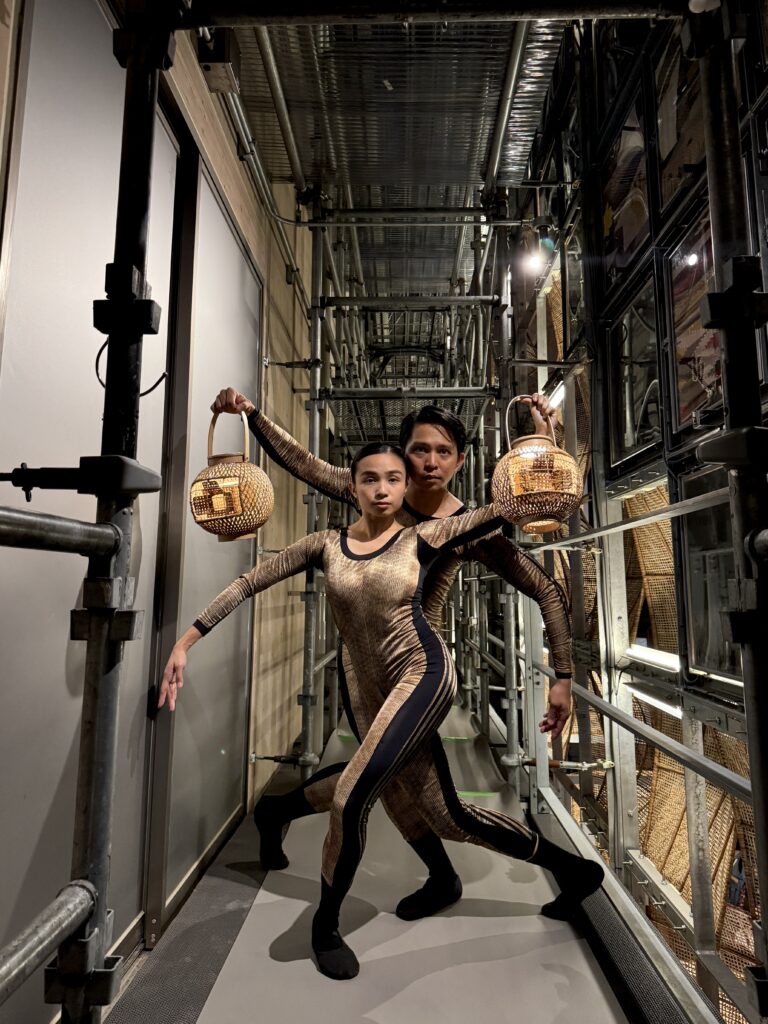
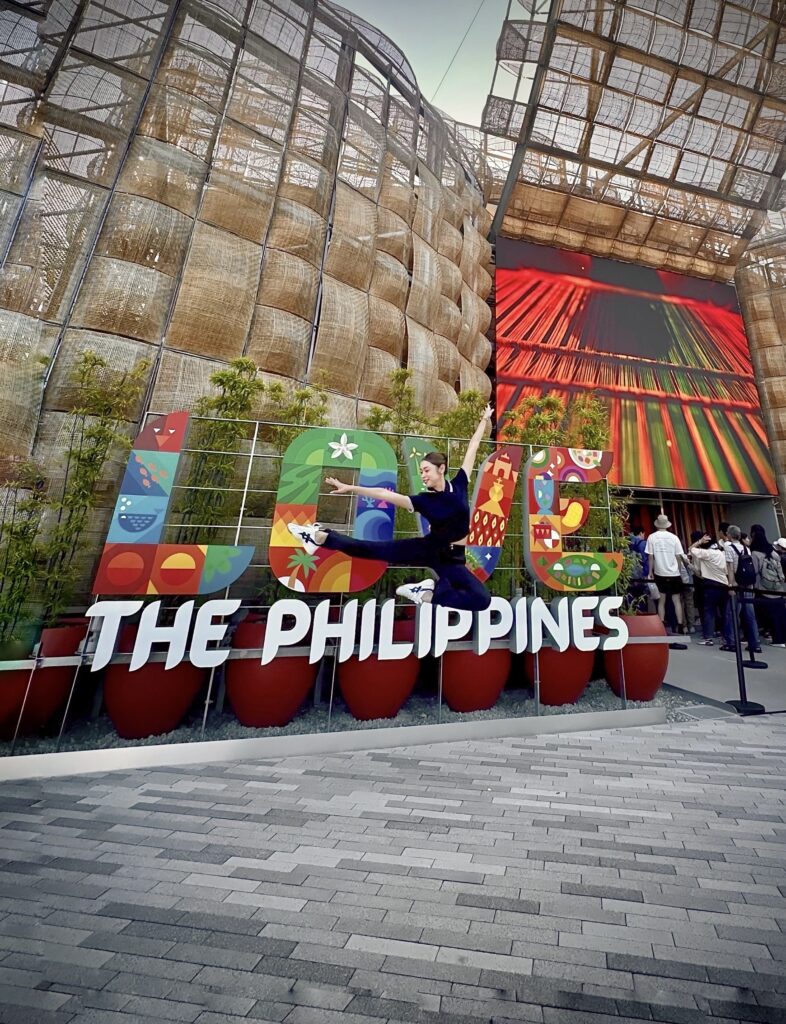
Jemima Reyes-Ocampo and Ian Ocampo | Photographed by Olivia Bugayong

 Beyond the technicalities of performing, being in Japan—especially for the Expo—meant something bigger. It meant being part of a global celebration of culture, innovation, and human connection. It was a chance to share our stories, traditions, and creativity with people from around the world. To be one of the many voices at the Expo was an honor I will never forget.

As I look back on the experience, I carry with me not just memories of a successful performance, but a deeper appreciation for the journey. From the moments of confusion on the trains to the cheers of the crowd as we danced among the tiles, everything felt like a dream unfolding.

I came to Japan with high hopes, and the experience surpassed all of them. It reminded me of why we dance in the first place—to connect, to inspire, and to celebrate the beautiful things that bring us together.

What a journey. What a gift. What an unforgettable first time in Japan.
Categories
BP Bulletin

When Walls Speak: Weaving Heritage Through Dance at the Philippine Pavilion

The Osaka Expo 2025 is a global event that brings together nations from all corners of the world to celebrate culture, innovation, and unity. As part of this monumental occasion, I had the honor of representing the Philippines at the Philippine Pavilion, performing for Ballet Philippines.

Penned by Danielle Kleiner, this article captures her perspective as a cultural ambassador at the Philippine Pavilion during Expo 2025.

Danielle Kleiner | Photo by Ballet Philippines

Being selected for such an esteemed opportunity was both a privilege and a deeply humbling experience. To represent my country through the art of dance on an international stage was something I had only dreamed of, but never imagined would come to life.

The lead-up to the Expo was a whirlwind of rehearsals and preparations. We had to be ready for daily performances, with two shows every day, each of them requiring precision, energy, and commitment. Our rehearsals were rigorous as we worked to perfect every detail of our performance. It wasn’t just about the choreography; it was about conveying the spirit of the Philippines through every movement. Performing twice a day was physically demanding, but the adrenaline and the joy of representing my country made every moment worthwhile. The experience wasn’t just about dancing; it was about embodying the essence of Filipino culture—something that made the entire journey all the more meaningful.

Upon arriving at the Osaka Expo, I was in awe of the grandeur of the event. The sheer scale of the Expo, with over 190 countries participating, was overwhelming. But when I entered the Philippine Pavilion, everything fell into place. The Pavilion, designed by Mr. Carlo Calma, reflects our rich cultural heritage— a blend of modernity and tradition, echoing the very spirit of the Philippines.

Our performance at the Osaka Expo was much more than just a dance; it was a visual and emotional representation of our country’s artistry and heritage. The choreography, which was inspired by the intricate process of weaving, symbolized how we, as Filipinos, are all part of something much greater—a shared history and collective identity. Our dance was designed to reflect the loom, a tool that has long been at the heart of Filipino craftsmanship, and we used our movements to embody the threads of culture and history that weave us together.

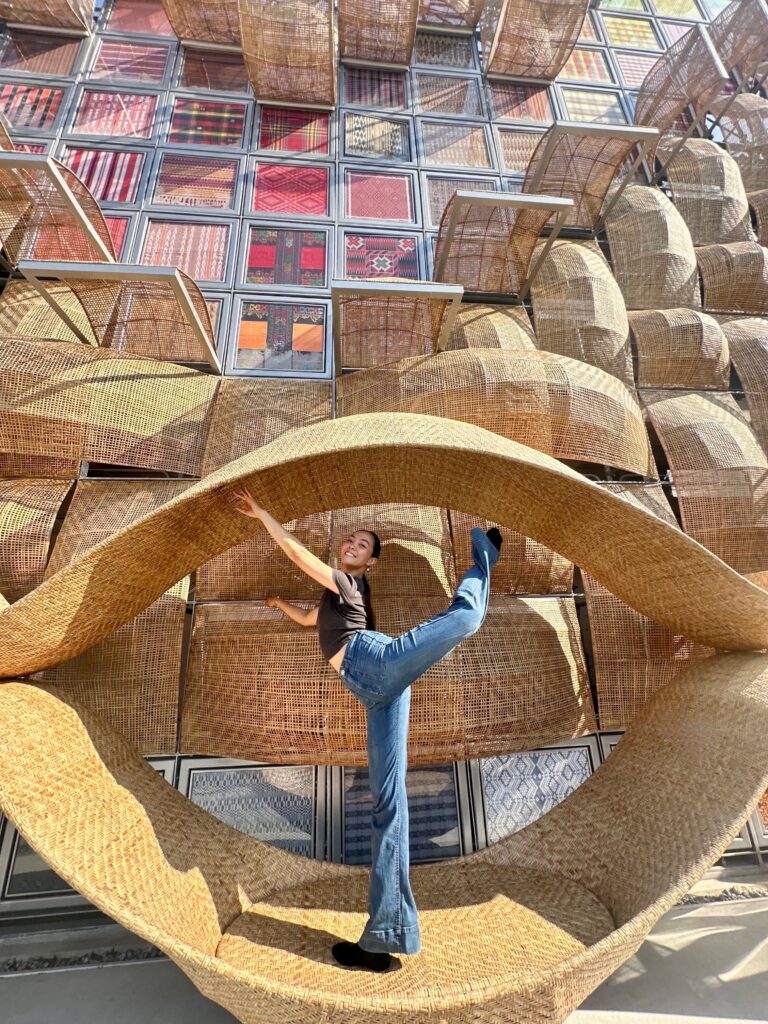
What made this performance truly unique was how we integrated our movements with the Pavilion itself. The walls of the Philippine Pavilion became more than just a backdrop—they became part of the performance. As we danced, it felt like we were connecting with those very walls, weaving into the fabric of the Pavilion itself. The Pavilion, designed to showcase the Philippines, became a living, breathing entity, and our dance was a literal manifestation of that connection.

In those moments on stage, it felt as though the Pavilion’s walls could talk—if they could, I believe they would share the stories of the generations before us, the triumphs, and the struggles, the joys, and the sacrifices that have shaped us as a nation. We weren’t just performing on a stage; we were part of something deeply rooted in history, and every movement felt like an offering to those who came before us, as well as to those who will follow.

It was exhilarating to perform in such a dynamic environment, surrounded by people from around the world. The energy of the audience was palpable, and you could feel the excitement in the air as people from all walks of life watched. As I danced, I was not only representing Ballet Philippines but also sharing a piece of my identity as a Filipino. The connection to my audience was immediate, transcending language and borders, and I knew I was part of something much bigger than myself.

I also had the chance to interact with visitors, and there was a profound sense of curiosity about the Philippines. For many, it was their first exposure to Filipino culture, and I felt a deep sense of responsibility to represent it with grace and authenticity. Through this exchange, I learned that art, especially dance, has the power to change perceptions and create lasting connections between people from different parts of the world.

Danielle Kleiner | Photographed by Olivia Bugayong

Looking back, performing at the Osaka Expo was not just a personal achievement but a celebration of Filipino artistry on the world stage. The experience was a reminder of how powerful cultural exchange can be and how dance serves as a conduit for sharing stories, history, and emotions. On a personal level, this experience deepened my understanding of my own culture and reaffirmed my commitment to being a steward of Filipino arts.

I left Osaka not only as a dancer but also as a cultural ambassador, carrying the pride of the Philippines in my heart. And as I continue my journey in dance, I will always carry with me the pride of having represented the Philippines in such a momentous event. 

Categories
BP Bulletin

Sharing Filipino Artistry on the World Stage at Expo 2025

To be a Filipino dancer on the world stage is more than a profession, it’s a purpose. And for me, being part of Ballet Philippines and representing the country at the Osaka Expo 2025, performing at the Philippine Pavilion, was a surreal, life-changing experience that deepened both my artistic journey and personal growth.

Through this article, Carl Lacaba tells his story of pride, culture, and artistry as he represented the Philippines at the Osaka Expo 2025.

Carl Lacaba | Photo by Ballet Philippines

From the moment I received word that I would be part of the delegation to Osaka, excitement and nervous anticipation filled my heart. I knew this was not just any performance, it was a moment of national pride, a celebration of cultural identity, and an opportunity to share the Philippines with the world. Looking back, those 38 days in Japan became some of the most meaningful days of my life.

Being chosen to dance for the Philippine Pavilion was an honor that I still find hard to put into words. Outside of the stage, I embraced the opportunity to experience Japan’s rich and layered culture. Though my stay was brief, only 38 days, it left a lasting impression on me.

From the moment I arrived, I was struck by the hospitality and discipline of the Japanese people. Their deep respect for tradition, attention to detail, and pursuit of excellence resonated with me both as an artist and as an individual. Whether it was visiting serene temples, strolling through bustling Osaka markets, or simply riding the efficient and clean trains, every interaction offered something to learn and appreciate.

Clarise Miranda and Carl Lacaba | Photographed by Olivia Bugayong

Japanese cuisine, for instance, was a revelation. I indulged in sushi prepared with meticulous care, warming bowls of ramen that nourished both body and soul, and humble convenience store snacks that somehow felt gourmet. Each meal was a lesson in balance, respect for ingredients, and cultural expression.

I also had the chance to witness other national pavilions at the expo—each offering glimpses into different corners of the world. But Japan’s own contributions stood out to me. Their seamless blend of tradition and technology, their artistic sensibilities, and their hospitality created an experience that felt both intimate and grand.


Categories
BP Bulletin

For 38 Days, I Danced for My Country at Osaka Expo 2025

Representing my country through the art of dance has always been a dream, one that came true when I became part of Ballet Philippines and was given the honor of performing at the Philippine Pavilion during the Osaka Expo 2025.

This story is written by Ballet Philippines dancer Clarise Miranda, sharing her journey and reflections from performing at the Osaka Expo 2025.

Clarise Miranda | Photo by Ballet Philippines

What began as a professional assignment evolved into one of the most enriching experiences of my life, not only as an artist but as a Filipino who had the chance to carry our heritage internationally.

The moment I stepped into the grand expanse of Expo 2025 in Osaka, I was filled with awe. I knew I was entering a space where nations from all over the world gathered not only to showcase innovation but also to celebrate cultural identity. And for 38 unforgettable days, I was part of that global conversation, through movement, and music.

To dance in front of both Filipino expatriates and foreign visitors was deeply fulfilling. Others, unfamiliar with our culture, were captivated by the strength and grace woven into every step and gesture. 

Clarise Miranda | Photographed by Olivia Bugayong

The Osaka Expo 2025 was a celebration of what the world can be when cultures meet, when stories are shared, and when art becomes a bridge across differences. I return not only as a better dancer, but as a more grounded human being.

For 38 days, I danced for my country. I lived a different life. I met the world. And I will carry the rhythm of Osaka in my heart forever.

Categories
BP Bulletin

Dancing Through Boundaries: My Japan Expo Experience with Ballet Philippines

Dancing has always taken me places — both emotionally and physically — but nothing compares to the experience I had performing at the Japan Expo as part of Ballet Philippines. 

This reflection was written by Ballet Philippines dancer Ian Ocampo, sharing his journey and experiences performing at the Japan Expo 2025.

Ian Ocampo | Photo by Ballet Philippines

This trip was more than just a performance opportunity; it was a fusion of cultures, a test of adaptability, and ultimately, a celebration of art in one of the world’s most respectful and refined cultures. Although it was my fourth time in Japan, the thrill of returning with Ballet Philippines made it feel like the first.

Our performances were held in the Philippine Pavilion designed by renowned architect Carlo Calma. The space was unlike anything I had performed in before — visually stunning, creatively ambitious, and, admittedly, a dancer’s challenge. At first glance, we thought we wouldn’t even fit. The structure was intricate, layered, and deeply conceptual. We weren’t sure how movement would work within such a limited and uniquely shaped space. But dance has always taught me the value of flexibility — not just in body, but in spirit. Eventually, we made it work. In fact, what initially seemed like a limitation became a source of inspiration. Dancing within Calma’s architectural vision pushed us to reimagine the use of space, and in doing so, we brought life to every corner of the pavilion.

Every day, we had two performances — one at 5:30 PM and another at 7:00 PM. Though both were scheduled, they were anything but routine. Each performance felt distinct — shaped by the energy of the audience, the mood of the day, and our own personal evolution as performers. The earlier show carried the warmth of sunset, while the latter glowed with a more introspective energy. It was incredible to see how audiences responded. At first, it was just a few passersby who stopped out of curiosity. But as the days went on, our performances became something people looked forward to. Locals, fellow Expo participants, and tourists would gather around, making it one of the most awaited daily performances at the pavilion. There was an unspoken connection formed between us and the people who came — proof that dance, even in unfamiliar territory, speaks clearly to the soul.

Outside of performing, I cherished every bit of Japan’s culture. The food, of course, was a highlight. Whether it was ramen after rehearsals, onigiri between shows, or matcha ice cream to reward ourselves, everything tasted like care and tradition. But beyond the cuisine, what struck me most was the kindness and discipline of the Japanese people. From the organizers and pavilion staff to strangers who offered help without hesitation, everyone we encountered embodied quiet generosity and deep respect. It made the entire experience not just smooth, but genuinely heartwarming.

What made it even more special was the sense of community we formed — both within our own group and with people we met along the way. We made friends, exchanged stories, and discovered shared passions. Despite language barriers, we found ways to connect — through bows, smiles, and the universal language of appreciation for art. It’s moments like these that remind me why I love dance — not just for what it allows me to express, but for the doors it opens to understanding others.

Being in Japan as a dancer with Ballet Philippines filled me with pride. We weren’t just representing a company; we were carrying with us the rich tapestry of Filipino culture, talent, and resilience. Every time we performed, I felt a sense of honor — knowing that we were bringing a piece of home to an international stage. The reactions we received, from claps to heartfelt conversations after the show, affirmed that we were seen, heard, and appreciated.

Despite having been to Japan before, this visit felt different. It wasn’t just a trip; it was a chapter in my journey as an artist. It deepened my appreciation for cultural exchange and reaffirmed my commitment to the discipline and beauty of ballet. I’ve always admired Japan — its balance of tradition and innovation, its order, its gentleness. And now, having experienced it again through the lens of a performer, I’ve grown to love it even more.

Ian Ocampo and Jemima Reyes-Ocampo | Photographed by Olivia Bugayong

As I look back on the experience, I carry with me more than just memories of dance. I carry the feeling of performing in a space that once seemed impossible, the warmth of strangers who became friends, and the joy of doing what I love in a country I deeply respect. We’re proud of what we shared at the Expo, and even more excited for what’s to come. I can’t wait to return to Japan — not just as a tourist, but as an artist eager to learn, give, and grow.

Because no matter how many times I visit, Japan continues to feel like a beautiful new beginning.

Ballet Philippines
Privacy Overview

This website uses cookies so that we can provide you with the best user experience possible. Cookie information is stored in your browser and performs functions such as recognising you when you return to our website and helping our team to understand which sections of the website you find most interesting and useful.